|
McCloud River Subsidiaries and Affiliates Moscow, Camden & San Augustine Railroad |
|
|
 Detail map of the Moscow, Camden & San Augustine Railroad main line. 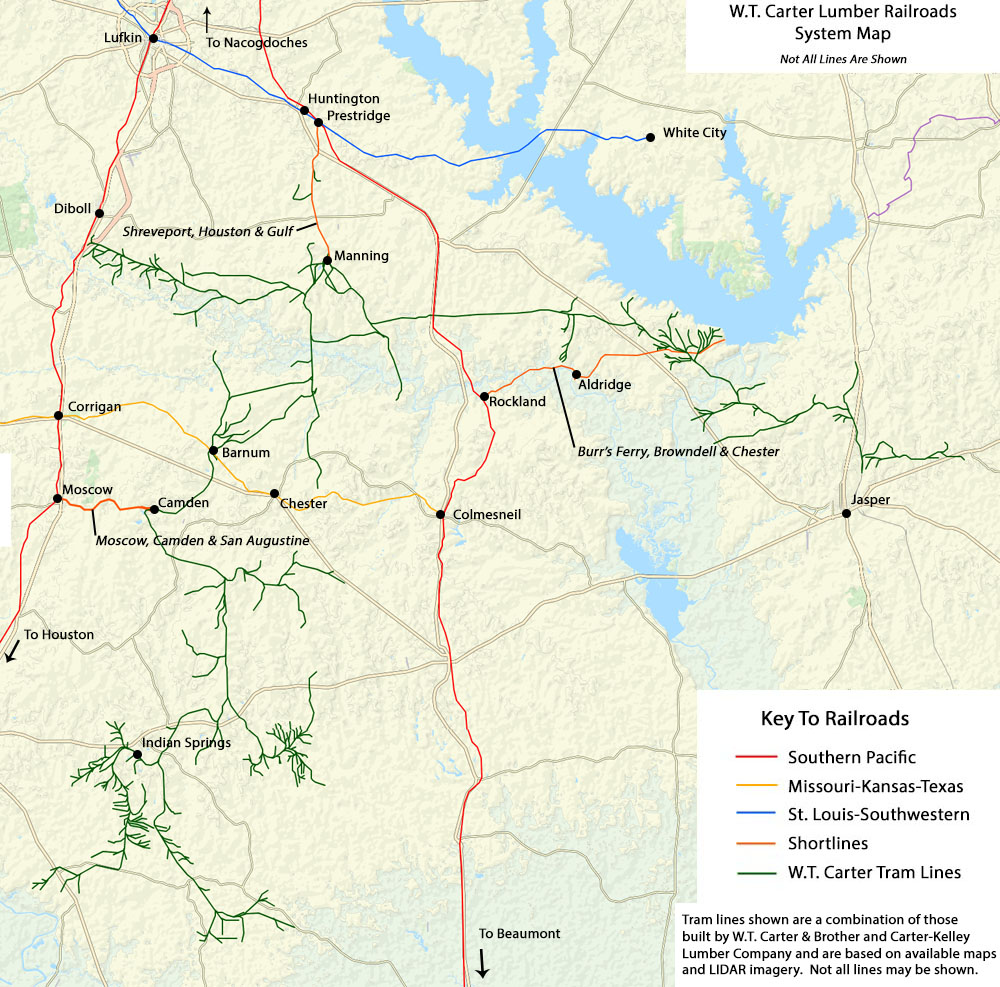
An overall system map of the W.T. Carter & Brother and Carter Kelley Lumber Company rail operations, including the MC&SA and SH&G shortlines. An interesting vestige of the McCloud River Railroad exists in the pine forests of eastern Texas, 175 miles southeast of Dallas, eighty-five miles northeast of Houston, and about 1,700 miles southeast of McCloud. East Texas is covered by thick stands of pine and hardwood forests, which supported the development of a nascient timber industry by the 1850s. The industry really started to flourish in the years after the Civil War as railroads built into the region provided economical transportation to distant markets. Similar to many other geographical regions, the timber industry in eastern Texas started with small sawmills that would exist in one spot for only as long as the surrounding timber lasted, at which point the sawmill would be moved to the next stand of trees. Lumber moved to either the market or the nearest railhead in wagons drawn by teams of oxen. Horses and high wheels almost identical to those used in the McCloud woods skidded logs out of the forest, with wagons used in longer log hauls. Twenty year old W.T. Carter incorporated the W.T. Carter & Brother Lumber Company in 1876, which got its start buying out his father's bankrupt sawmill operation in Trinity, Texas. The Carter company at first followed the typical operational pattern in the region, building and operating a succession of small mills into the early 1880s. By that point W.T. Carter had started to rethink the entire operational structure of the industry, correctly foreseeing the efficiencies that could be gained by operating one larger sawmill built on a railroad line supplied by vast stands of timberlands for extended periods of time. Carter got an opportunity to put this concept into practice in 1884 when the Missouri-Kansas-Texas (M-K-T)- controlled Trinity & Sabine Railway completed a line from Trinity east through Corrigan to Colmesneil. Carter started buying timberlands in area the new railroad served as it was being constructed, and as it neared completion he built a new sawmill at what would shortly becomed the new town of Barnum on this line. Keeping the sawmill at a single site required that logs harvested from the forests be transported ever greater distances to the sawmill, and by 1885 the company started building its first narrow guage logging railroad- known locally as trams- out into the woods. Carter initially powered this railroad with a pair of small Shays purchased new in 1885 (#1:1) and 1888 (#2:1). Lima built at least the #1:1 with extra wide wheels so that it could run on tram lines built using sweet gum logs as rails. 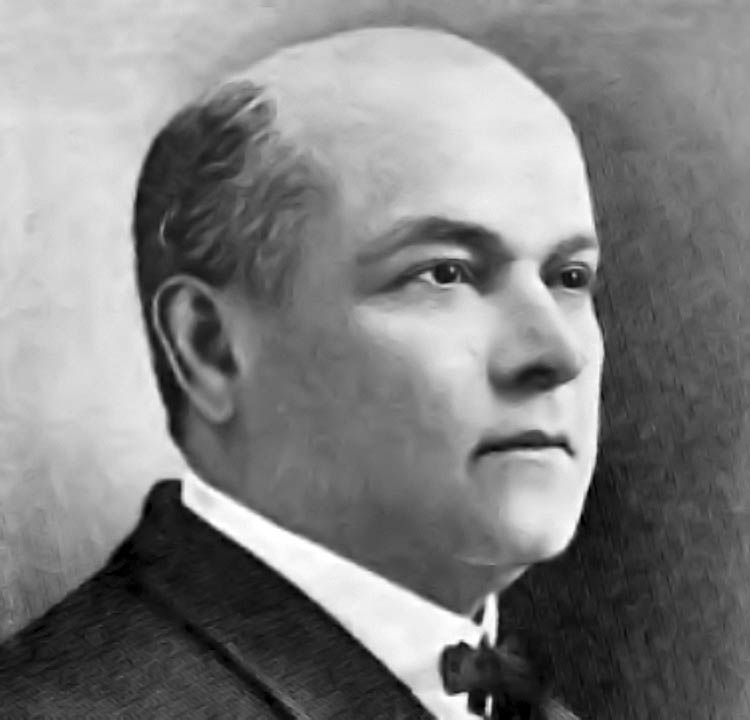 Portrait of W.T. Carter
Carter was among a large number of Texas lumber producers that had reaped the benefits of secret shipping rebates from railroads until the state created the Texas Railroad Commission and adopted new laws and an
amendment to the state constitution that, among many other actions, prohibited such rebates. Carter realized in the fallout of that action that building and owning his own common carrier shortline railroad between
his sawmill and a mainline connection would allow him to participate in, and benefit from, the freight rates he was paying to ship the lumber he produced as a way to make up for the loss of the rebates. A fire
ignited by sparks from a M-K-T steam locomotive that destroyed the Barnum mill on 1 September 1897 gave Carter the opening he needed to make this transition. Carter shortly selected a new sawmill site four miles
southwest of Barnum, to which his crews extended the narrow gauge tram. Construction of the new sawmill and the adjacent company town of Camden commenced as soon as ground could be cleared. The selected site lay as noted four miles south of the M-K-T's Trinity & Sabine Railway and six miles east of the north-south mainline of the Houston East & West Texas Railway, which had been started northeast from Houston in 1876, reached Lufkin in 1882, and completed a through line to Shreveport, Louisiana, in 1886. Carter opened negotiations with both carriers, and the HE&WT offered the better terms. On 23 June 1898 Carter and his associates incorporated the Moscow, Camden & San Augustine Railroad "to construct the proposed railroad from Moscow in Polk County, thence through Tyler and Angelina Counties to San Augustine in San Augustine County a distance of fifty miles. The corporate headquarters were established at Camden, Texas". Construction commenced quickly, with the 6.87 miles between Moscow and Camden, the only part of the projected line ever built, placed into operation on 19 November 1898. The decision to connect with the HE&WT proved somewhat prescient as the M-K-T entered receivership in 1915 and then sold the Trinity & Sabine Railway to the independent Waco, Beaumont, Trinity & Sabine Railway in 1923. The WBT&S itself declared bankruptcy in 1930 and abandoned the T&S in 1936. The MC&SA quickly settled down to its bucolic existence. The railroad commenced operations with a single 4-4-0 of unrecorded origin purchased for $1,950 when the road opened and apparently numbered #1. The railroad existed only to serve the needs of the W.T. Carter & Brother company, which largely meant hauling empty cars from the HE&WT interchange at Moscow to the Camden mills and then returning the cars to Moscow once loaded. Passengers and express traffic, which in the early years included almost all goods sold in the company store at Camden, rode in a caboose until the railroad purchased a combination passenger and baggage car in 1906. The Southern Pacific acquired control of the HE&WT in 1899, though the road would not be fully merged into SP's Texas & New Orleans subsidiary until the 1920s. W.T. Carter & Brother continued using the narrow gauge Shays to haul logs to the new mill until the company sold both in 1900. The Carter company apparently converted the tram roads to standard guage at this time and possibly acquired a standard gauge 2-6-0 or 4-4-0 of its own, or may have used the MC&SA #1 on the tram roads. Carter continued plowing every spare penny he could find into investing in every tract of trees in the area he could purchase. By 1905 the tram roads had started to extend far enough from Camden to require more locomotives, which prompted Carter to order three new 2-6-0 locomotives from Porter numbered 3, 4, and 5. The MC&SA annual reports filed with the State showed the railroad bought a second locomotive, listed in one report as the #7, in 1907. Little to nothing is known about the #7 other than it may have been either another 2-6-0 or a Shay. In 1910 W.T. Carter & Brother ordered a 46.5-ton 2-8-0 new from Baldwin that, when built in January 1911, left the factory lettered for the MC&SA. The #6 replaced the #7 upon arrival, but two years later the railroad sold the #6 back to the lumber company and spent a reported $5,285.13 rebuilding the #7 and placing it back in service. The railroad finally retired the #7, whatever it was, in 1915. W.T. Carter & Brother added a standard gauge Shay to its roster in 1912 that became the second locomotive to carry the #2. 
The MC&SA/W.T. Carter & Brother #6 switching in Camden. Jeff Moore collection. 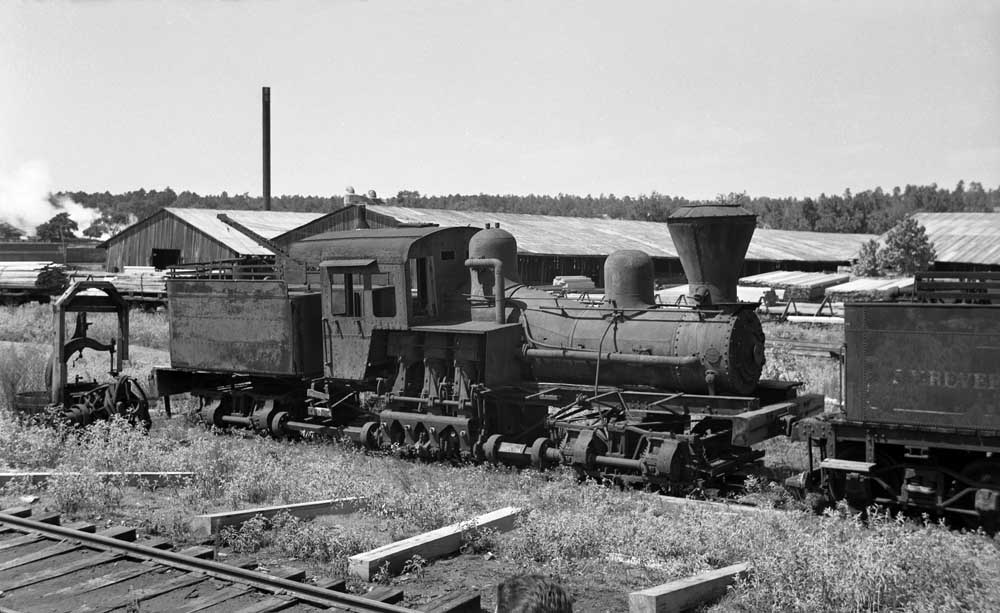
The W.T. Carter & Brother Shay #2 had been out of service for several decades by the 1 May 1961 date of this photograph. Carter apparently used the Shay on some of its steeper grades south of
Camden. Jeff Moore collection. The W.T. Carter lumber and railroad empire in east Texas expanded in 1906. Nineteen and a half miles northeast of Camden lay the site of a small sawmill built by a Dr. W.W. Manning in 1863. Both W.T. Carter and another lumberman named G.A. Kelley owned intermingled timberlands in the area, and the two decided to combine their interests into the Carter-Kelley Lumber Company. The Carter-Kelley company selected Manning's sawmill site for their new mill and company town, which they named Manning. The nearest railroads to the new site lay nine miles to the north where Southern Pacific's Nacogdoches to Beaumont main line crossed a branchline of the St. Louis Southwestern Railroad at a point named Prestridge, just east of the town of Huntington, Texas. On 19 June 1906 Carter and Kelley incorporated the grandly named Shreveport, Houston & Gulf Railroad which "...intended to construct the proposed railroad from a place known as Prestridge on the St. Louis Southwestern Railroad ten miles east of the town of Lufkin, Angelina County, State of Texas; thence southwardly through the counties of Angelina, Polk, Tyler, Liberty, Montgomery and Harris to the city of Houston, Texas, a distance of one hundred miles." However, much like the MC&SA, the new railroad would only ever build a small part of the proposed system, in this case the nine miles from Prestridge to Manning plus 1.3 miles of yard tracks and 1.75 miles of trackage rights over the St. Louis Southwestern to reach Huntington. The Carter-Kelley company built tram roads into the woods in several directions from Manning, including one line built at least 32 miles to the east around 1919 to tap some timber stands acquired from the Kirby and Wm. Cameron lumber companies after their big mill in Alderidge burned, followed by another line west along the Neches River towards Diboll. To power the operations the Carter-Kelley company acquired a succession of three new 2-6-0 locomotives from Baldwin between 1906 and 1908 that the company numbered 1-3, followed 2-6-2 #4 purchased from Baldwin stock in 1915, a used 4-6-0 #5 acquired in 1918, and finally another used Baldwin 2-6-0 #10 purchased in 1920. 
The Carter-Kelley Lumber #1 seen here working in Camden on 15 July 1937. R.H. Carlson, Jeff Moore collection. 
The Carter-Kelley Lumber #2 in Manning, Texas, in June 1939. R.H. Carlson, Jeff Moore collection. 
Carter-Kelley #3, also seen here in Manning in June 1939. Jeff Moore collection. 
Carter-Kelley #4 in Camden, Texas, in July 1938. R.H. Carlson, Jeff Moore collection. 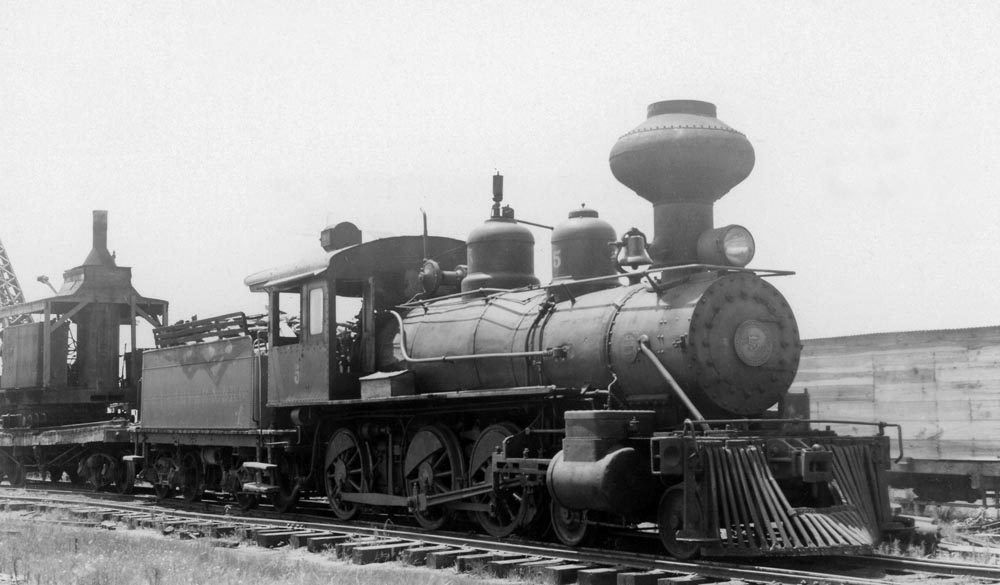
Added May 2026. Carter-Kelley #5, seen here lettered for W.T. Carter & Brother, in Camden in June 1950 along with a log loader. Jeff Moore collection. 
Another later shot of Carter-Kelley/W.T. Carter & Brother #5. Jeff Moore collection.
W.T. Carter died in 1921, but by the time of his passing Carter had built a management team fully capable of continuing the operation, and the Carter family remained firmly in control of the enterprises. Logging
operations continued spreading ever further south as the companies cut through the northern part of their holdings, and in 1922 the company expanded operations in Camden when it built a hardwood mill to process the
large quantities of hardwoods growing on the company's properties. The W.T. Carter & Brother company completed a tram line connecting Camden and Manning in 1928, the same year the company bought out all of the
Kelley interests in the Carter-Kelley Lumber Company and SH&G railroad. The Carters kept operating the companies as separate organizations despite the consolidated ownership, and the tram lines moved some of
the logs from the southern cutting areas through Camden to the Manning mill, with some of the log hauls exceeding fifty or more miles. The Carter organizations continued adding to the locomotive roster as the operations expanded and some of the earlier power wore out. In 1922 Carter bought an Alco 2-6-0, one of many almost identical machines built by Alco and Baldwin for use in building the Panama Canal and then brought back to the United States by the Equitable Equipment Company of New Orleans, Louisiana, after the canal had been completed. Equitable regauged the locomotives from Panama's five foot gauge to American standard guage, and then resold them. The locomotives proved especially popular on loggers and shortlines all over the southeast. The locomotive kept its Panama #201. The following year the MC&SA, which had apparently been leasing W.T. Carter & Brother power since 1919, leased and then purchased an ancient Alco 4-6-0, #356, that the road used for a little over a year before setting aside. Carter replaced the #356 with the #201, and then in 1926 returned the #6 to the MC&SA roster. W.T. Carter & Company itself bought two more locomotives, both larger Baldwin 2-8-2 Mikados, the #1 new in 1925 and then the #14 from the used market in 1940. The W.T. Carter & Brother company continued operating both sawmills until 1935, when the Manning mill burned to the ground. The Manning mill had burned and been rebuilt at least twice before, but by this time insufficient timber remained in the area to justify rebuilding it again, and all manufacturing operations shifted to Camden. W.T. Carter & Brother officially acquired all Carter-Kelley equipment in 1936, but did not renumber the locomotives to eliminate duplicates with the existing Carter fleet. The SH&G continued handling passenger and mail traffic using a self propelled railbus until the last day of 1936 when the railroad received regulatory approval to abandon service. The Carter company scrapped out the railroad in 1938 and then gradually cut the tram lines to Camden back as logging operations wrapped up. 
The #201, seen here in Moscow on 15 July 1937. Ray Whitaker photo, Jeff Moore collection. 
Another view of the #201, this one in Camden, with one of the Carter Lumber locomotives visible behind it in the enginehouse.
Ivan W. Saunders photo. 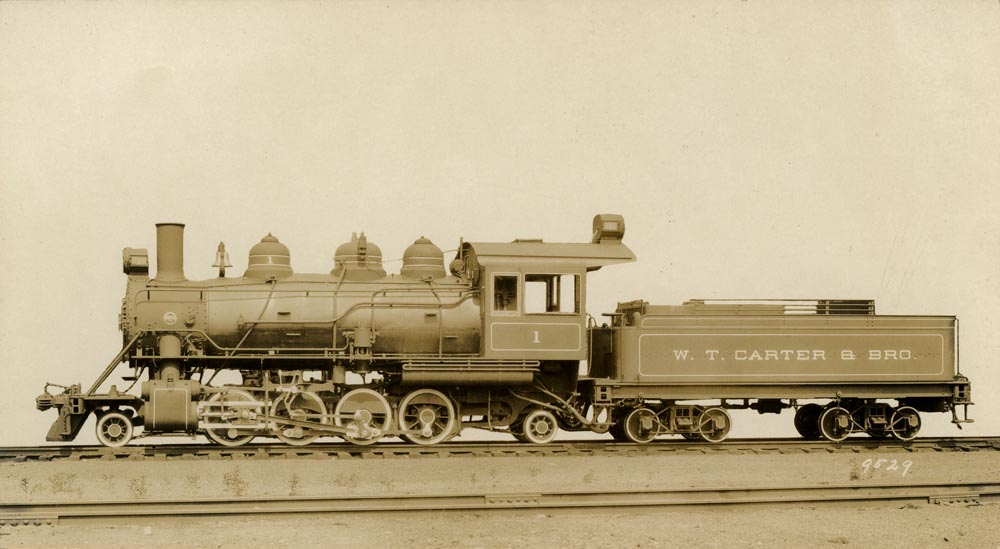
Builder's photo of the W.T. Carter & Brother #1 on the front of a specification card. Jeff Moore collection. 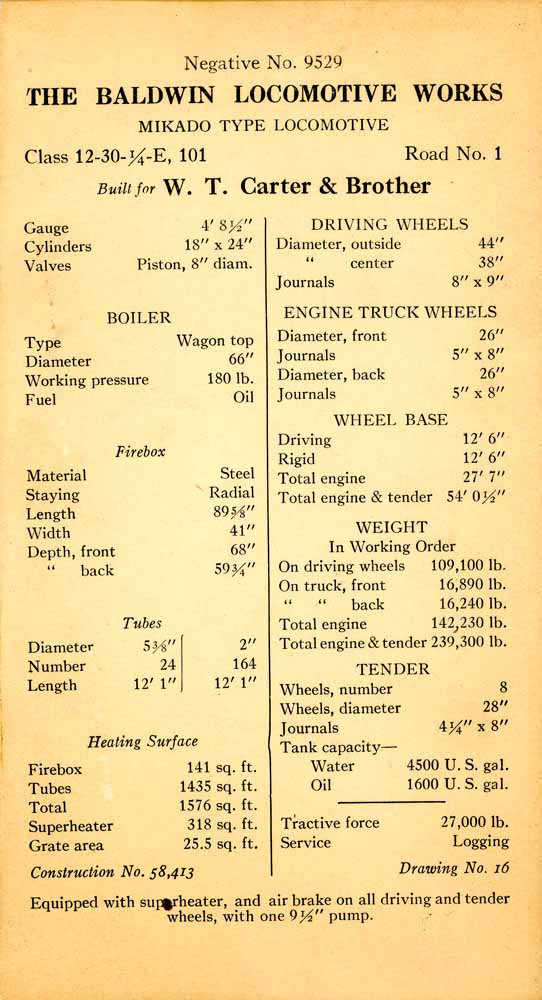
Specification sheet for the W.T. Carter & Brother #1. Jeff Moore collection. 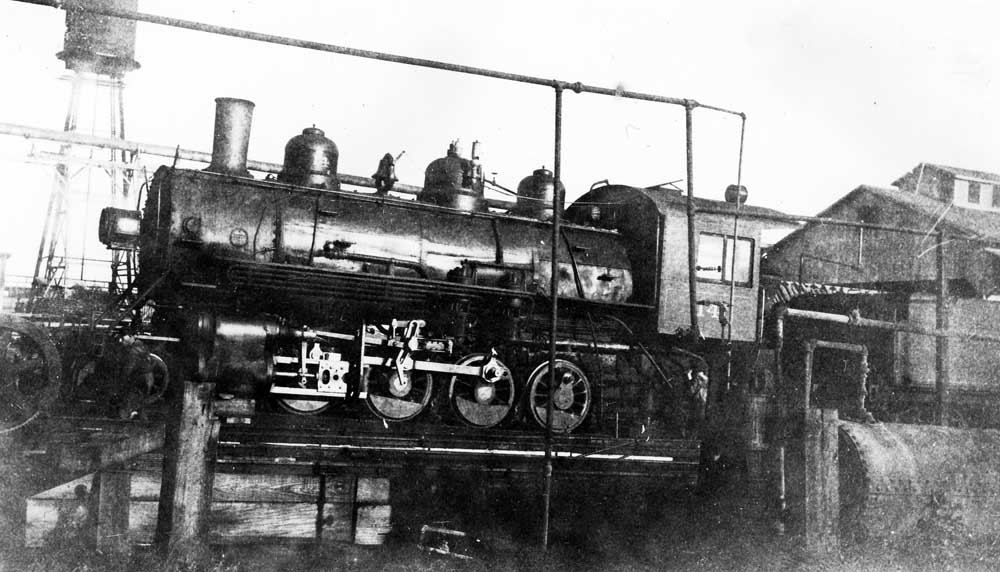
Added May 2026. Rock Creek Lumber #14 prior to its sale to W.T. Carter & Brother. Trego photo, Jeff Moore collection. 
The W.T. Carter & Brother #14 in Camden. Jeff Moore collection. 
W.T. Carter & Brother used several of these American Hoist & Derrick log loaders in its operations. Jeff Moore collection. 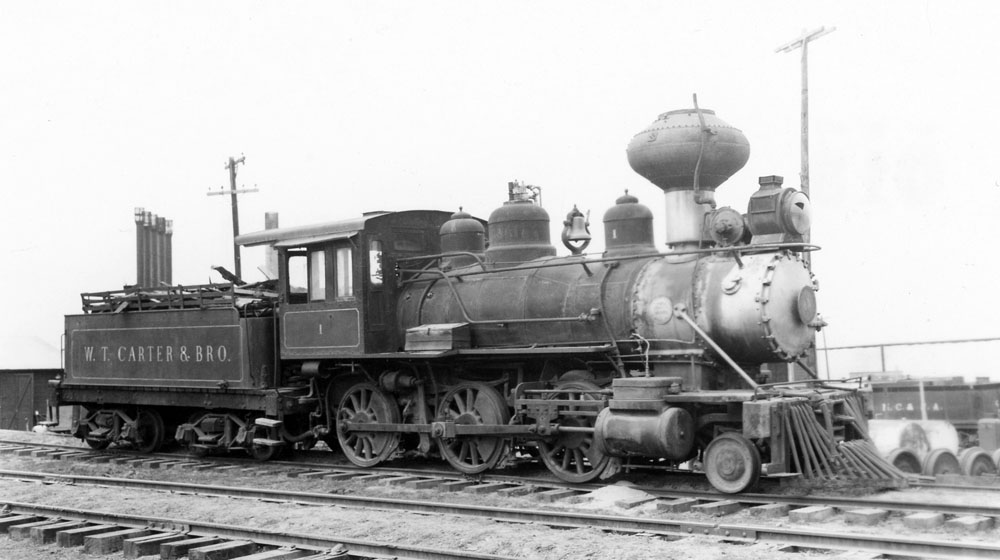
Added May 2026. W.T. Carter & Brother #1, formerly Carter-Kelley #1, in Camden in April 1954. Vollrath photo/Jeff Moore collection. 
The former Carter-Kelley #2, seen here in Camden lettered for W.T. Carter & Brother. The locomotive had been converted to oil and extensively modernized from how it appeared in the 1939 view above.
R.H. Carlson, Jeff Moore collection. The Carter operations continued thriving as the 1950s waned. There were some modernizations, such as trucks fully replacing all of the tram lines by around 1957, which left the MC&SA as the sole remnant of the once extensive Carter railroad operations. On the other hand, Camden by this point was the last company timber town in Texas, and the Carter company simply parked a good part of its steam locomotive fleet and old railcars in a field adjacent to the sawmill as the rail operations shrunk instead of selling or scrapping the by now archaic equipment. There was one other factor that started to make the MC&SA especially popular and well known. Provisions in Texas state law had long required every common carrier operating in the state provide passenger service, and to that end the railroad had maintained a wooden combination passenger and baggage car that had been built in 1898 for the Long Island Railroad and purchased by the MC&SA in 1927 that would be coupled to the end of every freight train. Railfans and tourists started flocking to the railroad in ever increasing numbers through the later 1950s, with the increasing popularity helped in no small part by the railroad remaining 100% steam powered. The railroad traded off operations between the #6 and #201 every other week, with the #14 available as a backup if needed. The train left Camden every weekday at 10:40 A.M. sharp, arriving in Moscow at 11:10 A.M. Once in Moscow the locomotive would be turned on the Armstrong turntable, the outbound loads would be spotted, and the inbound cars rounded up from the interchange tracks. The return trip was scheduled out of Moscow at 11:55 A.M., with arrival back in Camden set for 12:25 P.M. Fare to ride the train stood at twenty-five cents for a one way trip or fifty cents for the round trip for decades. Once back in Camden many passengers would flock from the train to the company cookhouse, where a dollar could buy one of the best noon meal available for many miles in any direction. Watching the train's conductor share his lunch with the free range pigs and dogs around the depot also remained a popular pastime for the passengers, as was exploring the lines of derelict steam locomotives. 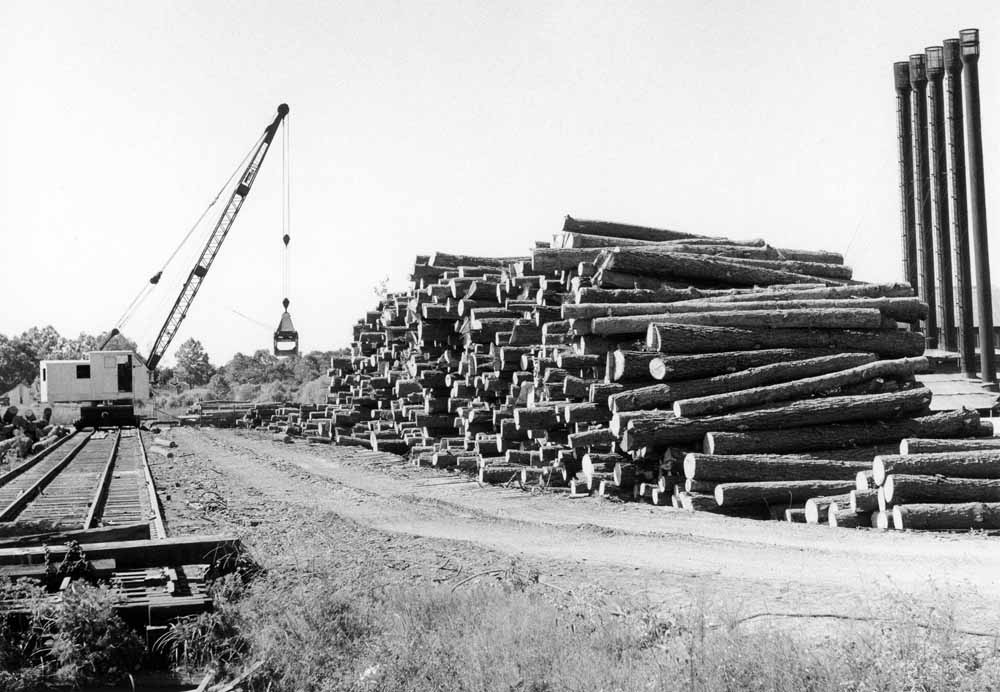
Added September 2026. The W.T. Carter log yard in Camden on 6 October 1960. Jeff Moore collection. 
MC&SA's Camden depot as it appeared on 7 July 1960. As a reminder that this was the Jim Crow south, the signs over the two doors denote separate entrances for "Whites" and "Colored"; the
combination car had similarly segregated compartments. Jeff Moore collection. 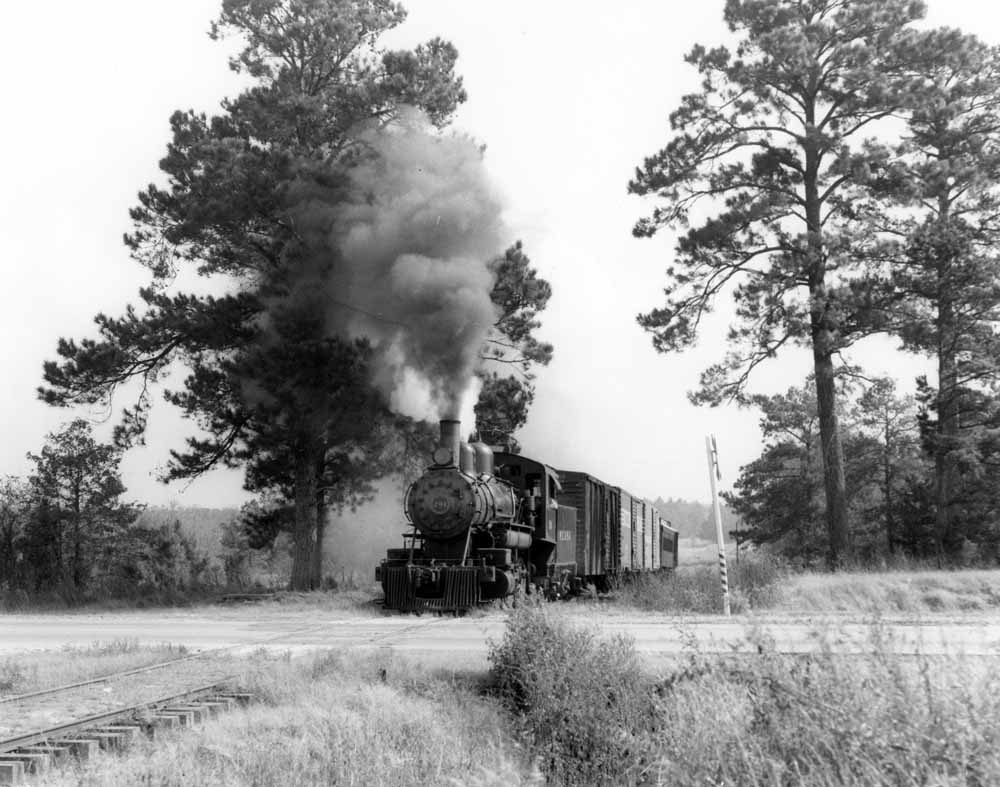
MC&SA #201 with a mixed train on the line on 12 November 1955. C.W. Witlock photo, Jeff Moore collection. 
An undated rear 3/4 view of the #201, probably switching in Camden late in its career. 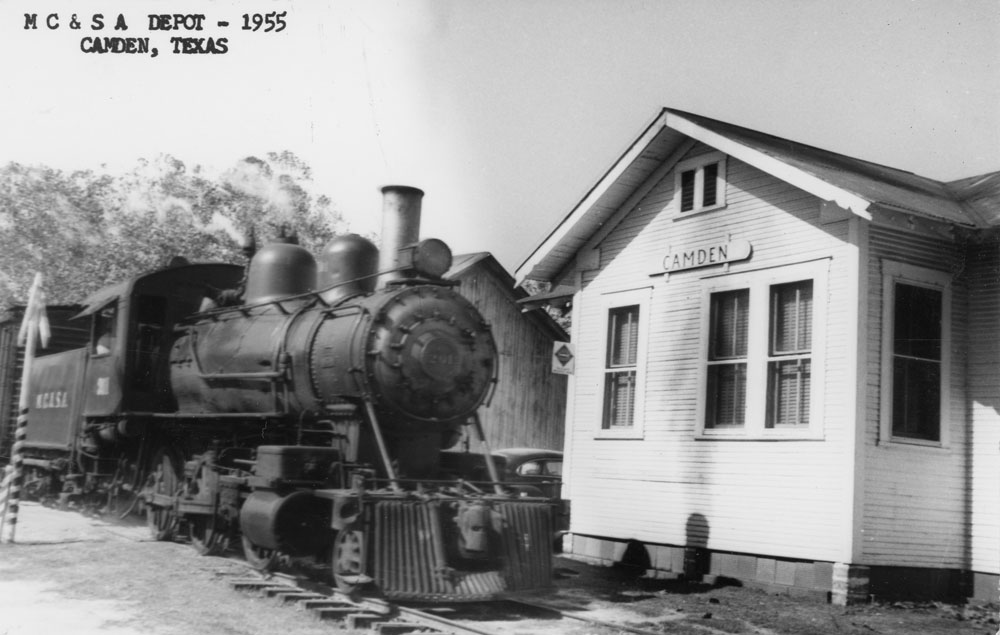
New January 2026. The #201 passing the Camden depot in 1955. 
The #201 in front of the Camden enginehouse on 28 January 1959. 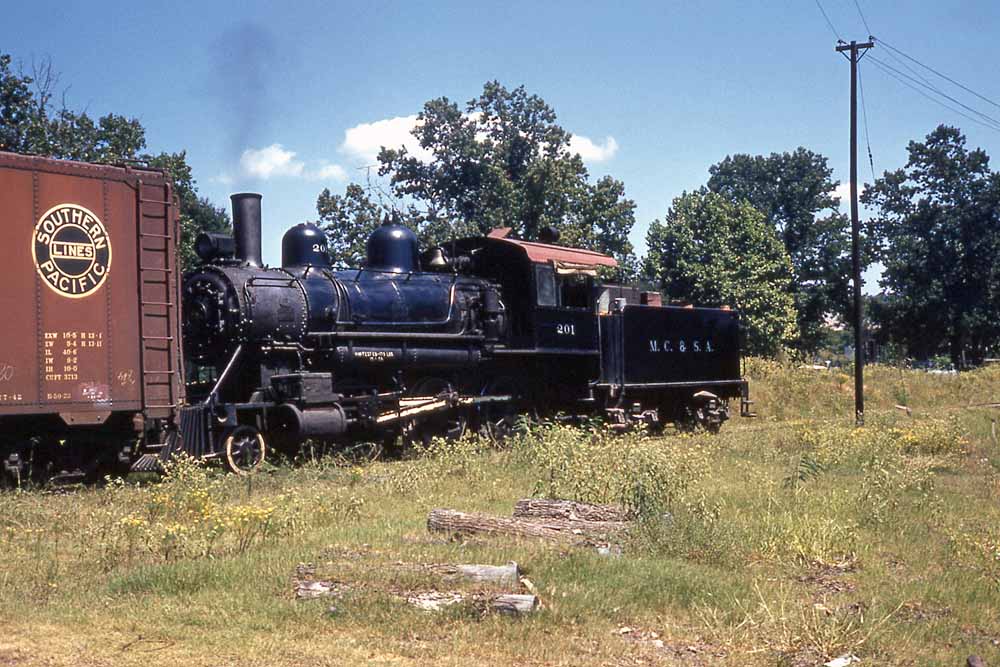
Added September 2026. An uncredited and undated photo of the #201 switching cars on the line. 
This color image of the #6 is a duplicate slide from an old commercial set distributed by Universal Slides. Jeff Moore collection. 
The #6 switching in Camden on 28 January 1959. Jeff Moore collection. 
The #6 powering a Moscow-bound train on the main line. Jeff Moore collection. 
The #6 switching in Moscow on 28 January 1959. Jeff Moore collection. 
Another shot of the #6 switching pulpwood cars next to a speeder in Moscow on 28 January 1959. Jeff Moore collection. 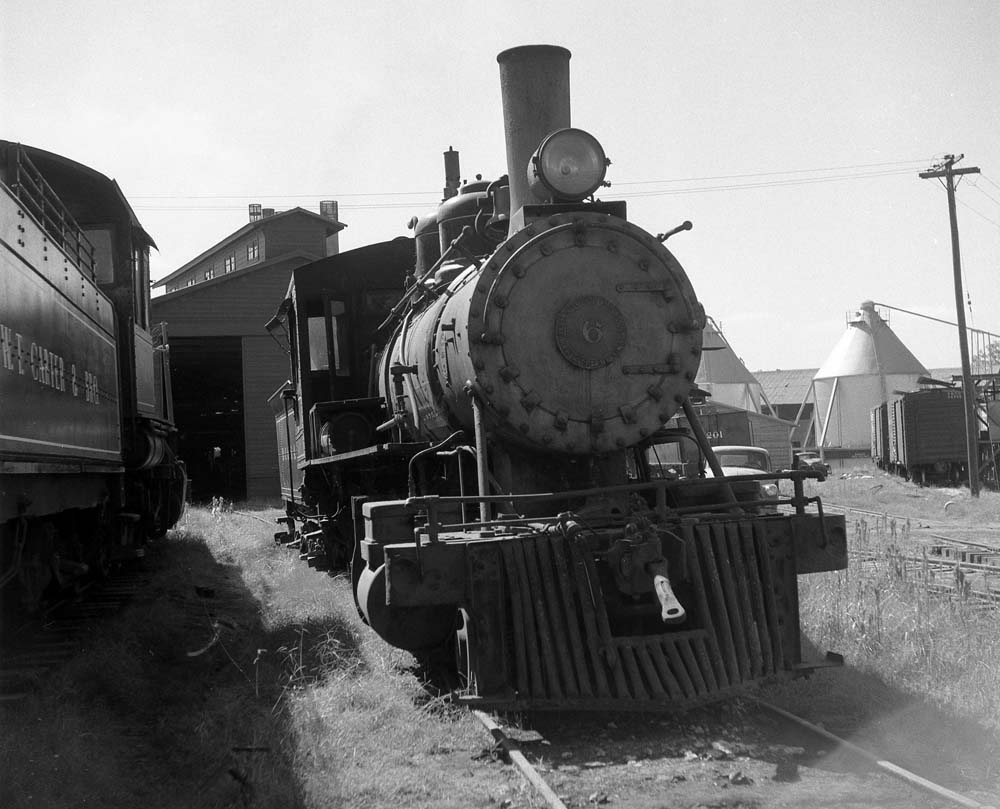
Though long outlawed in interchange service, a few company service cars on the property still used link and pin couplers. The Carter and MC&SA steam fleet all carried slotted knuckle
coulers that would accept link and pin couplers when needed, as demonstrated by the #6 in Camden on 5 October 1960. P, Munrop photo, Jeff Moore collection. 
One last shot of the #201 in Camden, this one on 17 June 1960. 
W.T. Carter Lumber #14 powering the daily mixed train on 7 July 1960. Jeff Moore collection. 
A color view of the Carter steam power stored in Camden in the late 1950s. One of Carter's 38-foot skeleton log cars loaded with steel beams is on the near track. Jeff Moore collection. 
Another view of some of the steam locomotives stored in Camden. 
The former Carter-Kelley #1, now lettered for W.T. Carter & Brother, in storage in Camden. Jeff Moore collection. 
The other W.T. Carter & Brother #1 in storage in Camden. Jeff Moore collection. 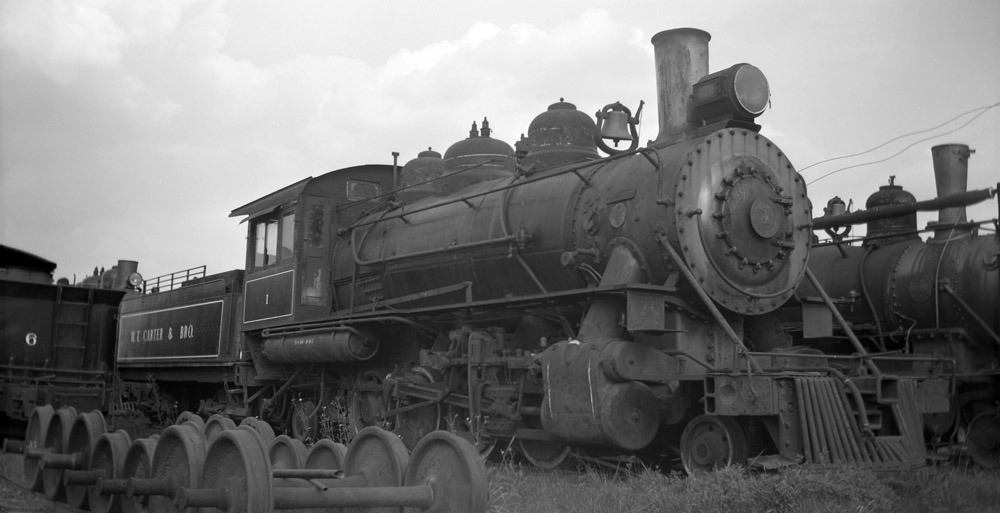
A later view of the #1 stored in Camden. Jeff Moore collection. 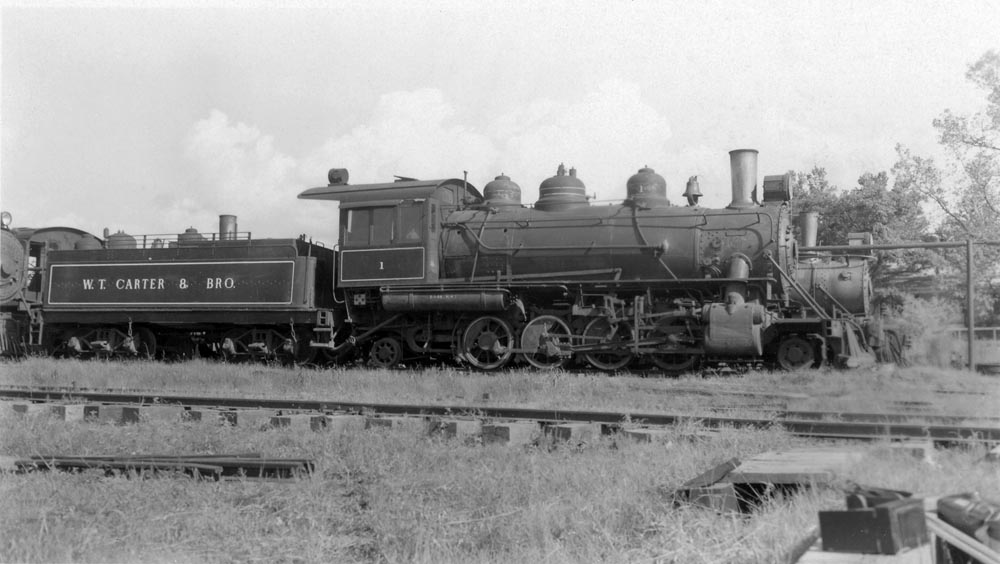
Added May 2026. A broadside view of the #1 in Camden in July 1968. Vollrath photo, Jeff Moore collection. 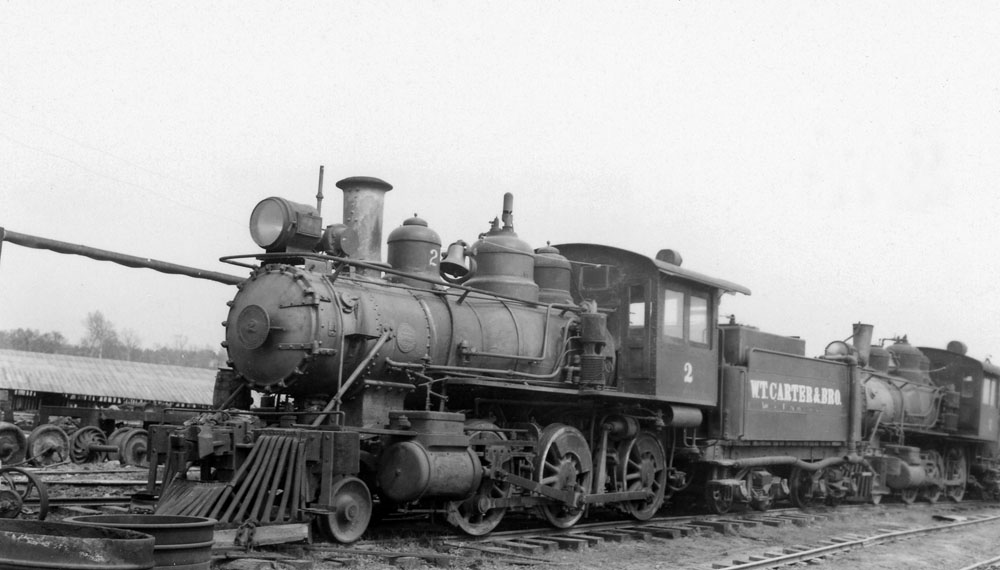
Added May 2026. The former Carter-Kelley #2 in Camden in April 1955 parked at the spot the #3 would later occupy for the later 1950s and early 1960s. Jeff Moore collection. 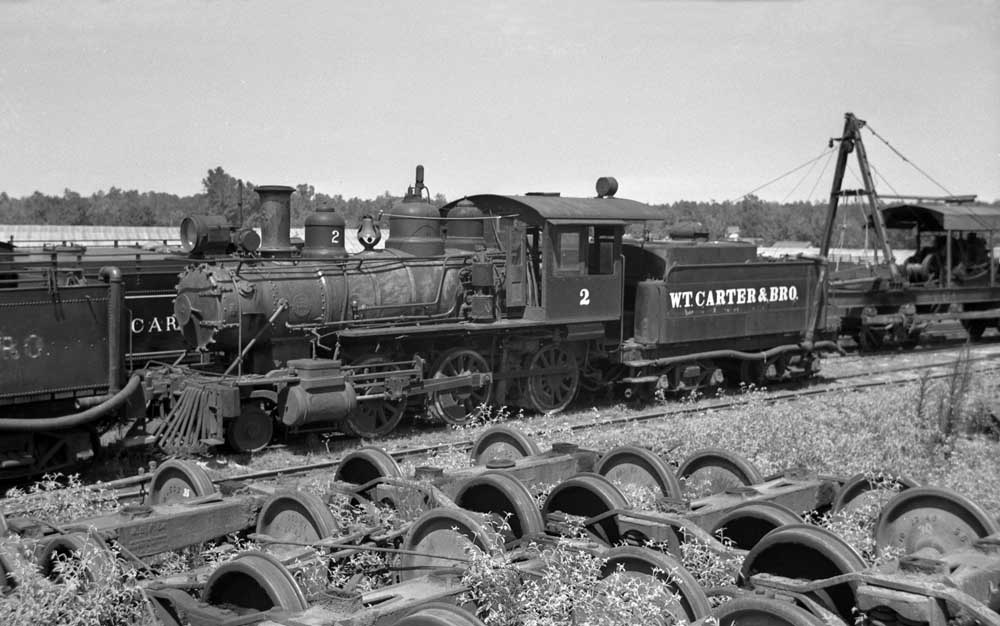
The former Carter-Kelley #2 stored in Camden. Jeff Moore collection. 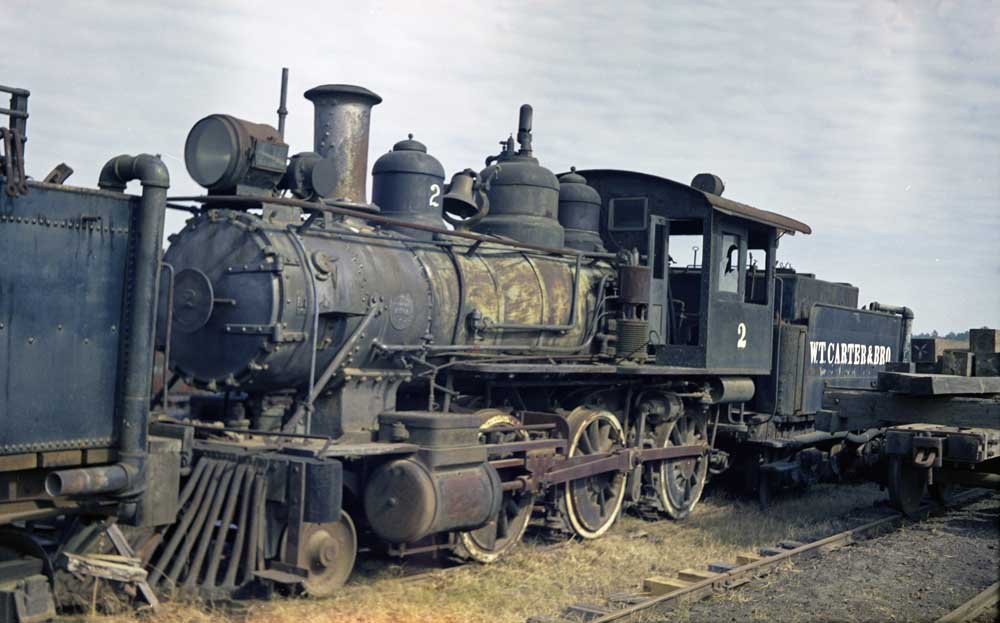
A color shot of the #2 in Camden. Jeff Moore collection. 
A later shot of the #2 after it lost its spot plate, air pump, and other parts. Jeff Moore collection. 
This view of Carter-Kelley #3 in Camden in April 1955 shows it got the same modernization as the C-K #2. Harold K. Vollrath, Jeff Moore collection. 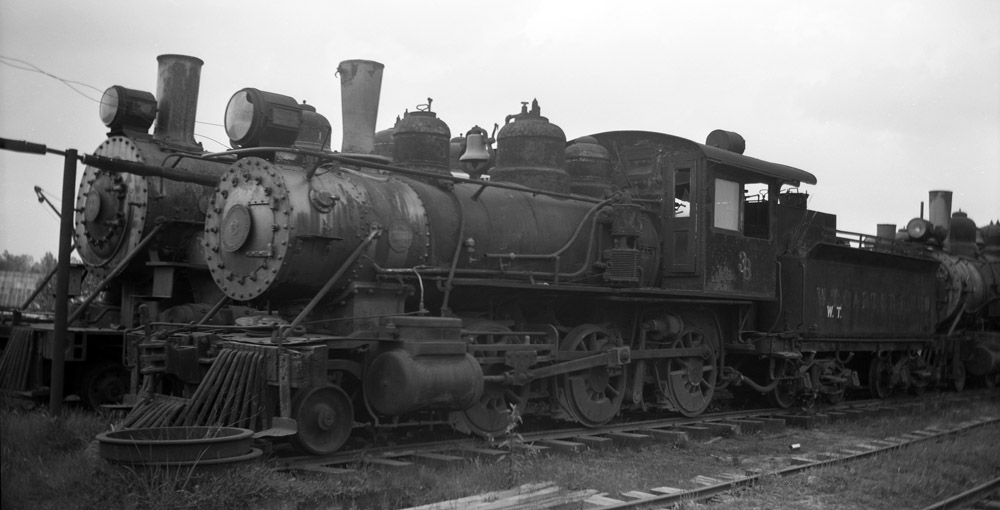
Another shot of the former Carter-Kelley #3 in Camden. Jeff Moore collection. 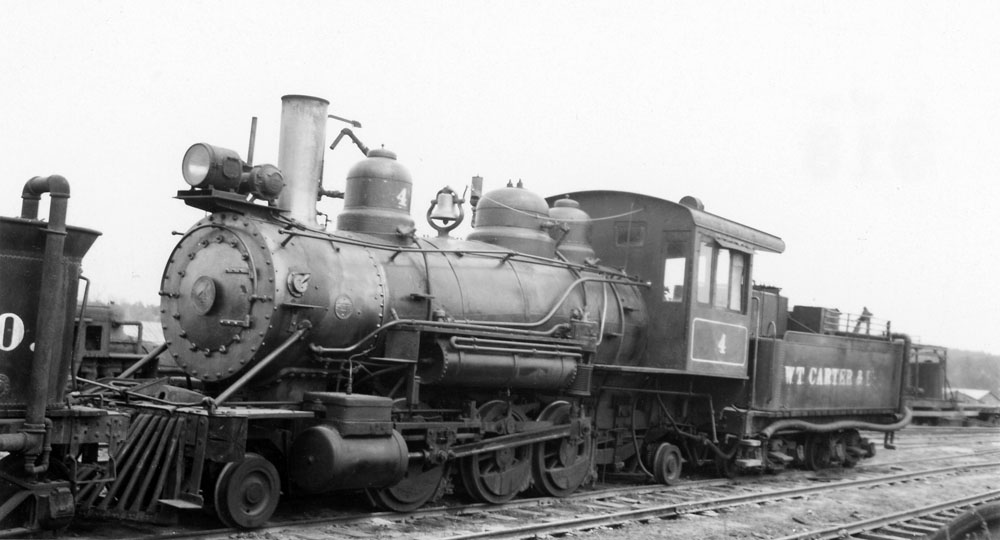
Added May 2026. The former Carter-Kelley #4 in Camden in April 1955. Shay #2 is partially visible between the engine and tender. Vollrath photo, Jeff Moore collection. 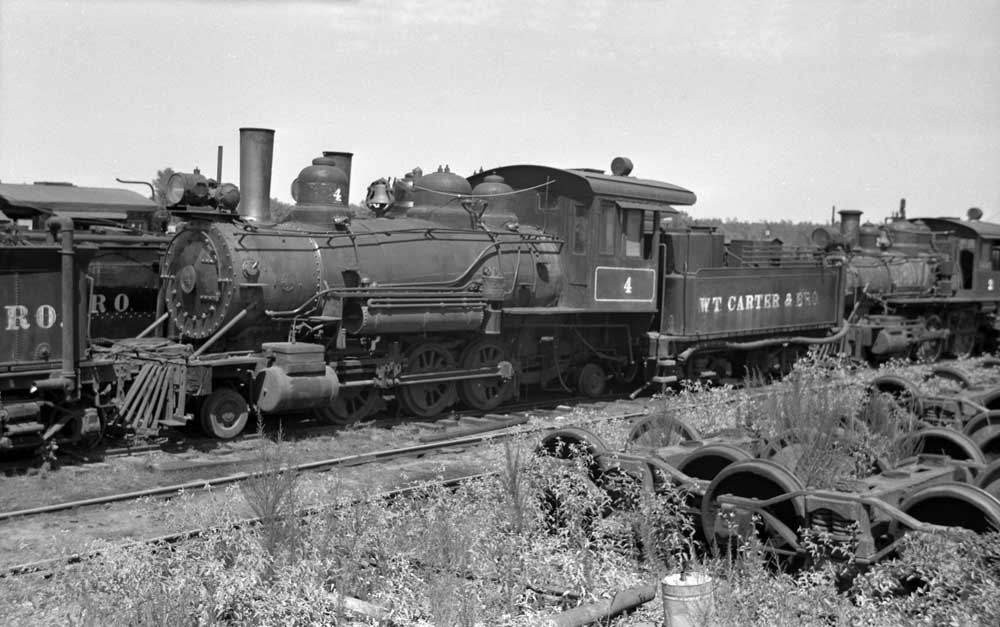
Another shot of the #4 in Camden. Jeff Moore collection. 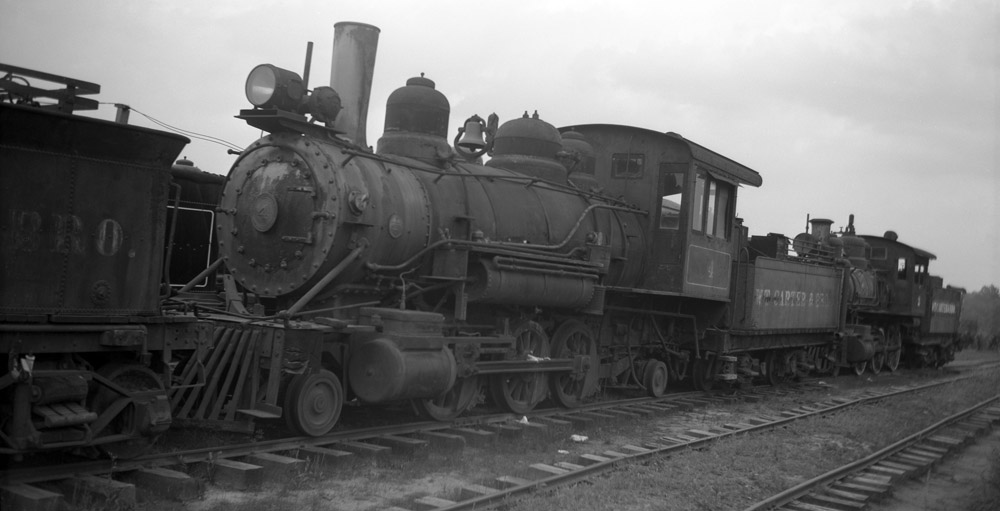
Another view of the former Carter-Kelley #4 in Camden. Jeff Moore collection. 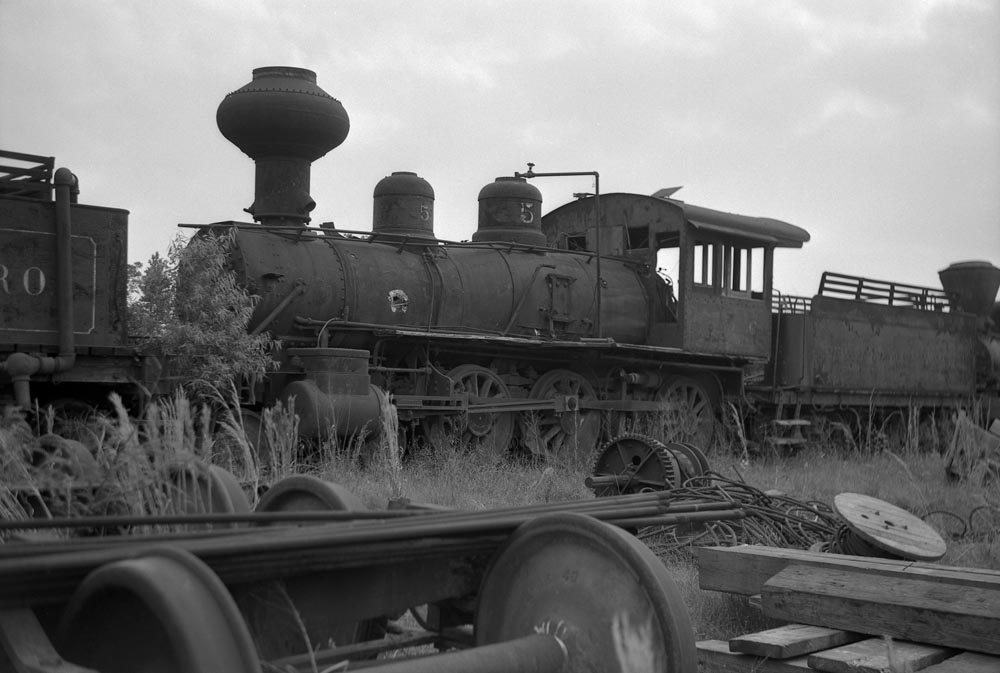
The former Carter-Kelley #5 in Camden. Jeff Moore collection. 
Color photo of the #3 and 2-8-2 #1 in Camden on 28 January 1959. 
A side view of the #3 on 28 January 1959. 
One last color shot of the Carter-Kelley #1 and #5 and W.T. Carter & Brother Shay #2 on 28 January 1959. 
Among the historical equipment stored in Camden was W.T. Carter boxcar #401. The car had been one of 15 boxcars the MC&SA purchased new from American Car & Foundry in 1909 that survived in company
service. It's seen here in May 1958. Jeff Moore collection.
Steam on the MC&SA lasted until 1961, when the railroad finally acquired a used General Electric 44-ton switcher from the Southern Pacific and the three steam locomotives joined the rest of the Carter ghost
fleet in the field next to the sawmill. The diesel had a fascinating history in its own right, as GE had built it in November 1944 for SP subsidiary Pacific Electric, where it carried road number 1654. On 1
November 1958 SP transferred the locomotive to another subsidiary, the Texas & New Orleans, who numbered it 17. The T&NO retired the #17 on 30 June 1960 and then sold it to the W.T. Carter & Brother
Lumber Company on 4 January 1961. Carter rented the locomotive to the MC&SA a week later, and then sold it to the railroad another week after that. Operations with the diesel continued as they always had,
as the switch from steam to diesel power didn't substantially affect the passenger ridership. The one exception came in January 1965 when the diesel would be undergoing a scheduled rebuild, which prompted the
Carter company to return its steam locomotive #14 to service to handle trains on the MC&SA. Several railroad magazines got news of the brief return of steam, and many railfans flocked to the piney woods of east
Texas for one last look at what had become a long forgotten anachronism, a steam powered shortline mixed freight. 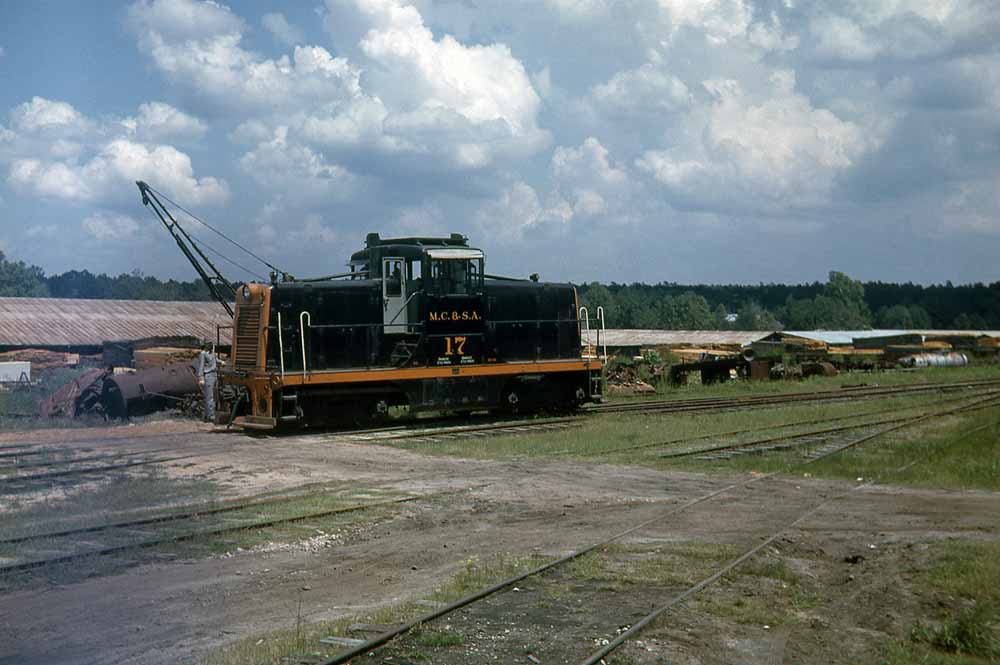
Added May 2026. MC&SA #17 in Camden in September 1961, about nine months after arriving on the railroad. Jeff Moore collection. 
MC&SA #17, seen here in Camden in 1968; the wooden platform on the roof once supported the trolley poles required to activate the signal system on the electrified Pacific Electric. P.D. Custer Jr. photo,
Jeff Moore collection. 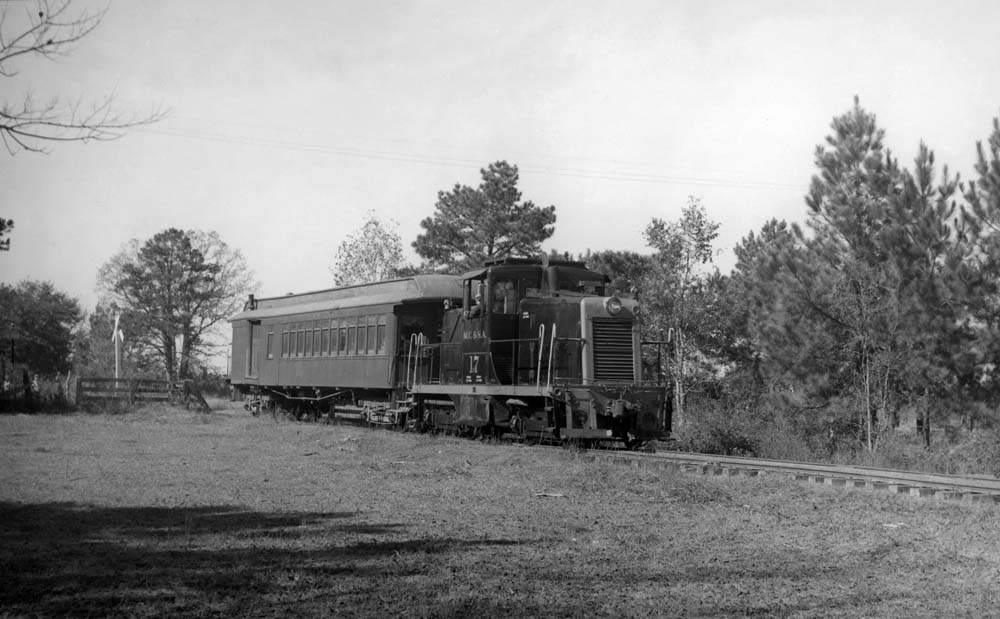
#17 with only the passenger car on the line on a day the road had no freight cars to move. A.E. Brown photo, Jeff Moore collection. 
The #17 in Camden on 30 May 1969. Unknown photographer, Jeff Moore collection. 
An undated photo of the #17 switching the Camden mill. Unknown photographer, Jeff Moore collection. 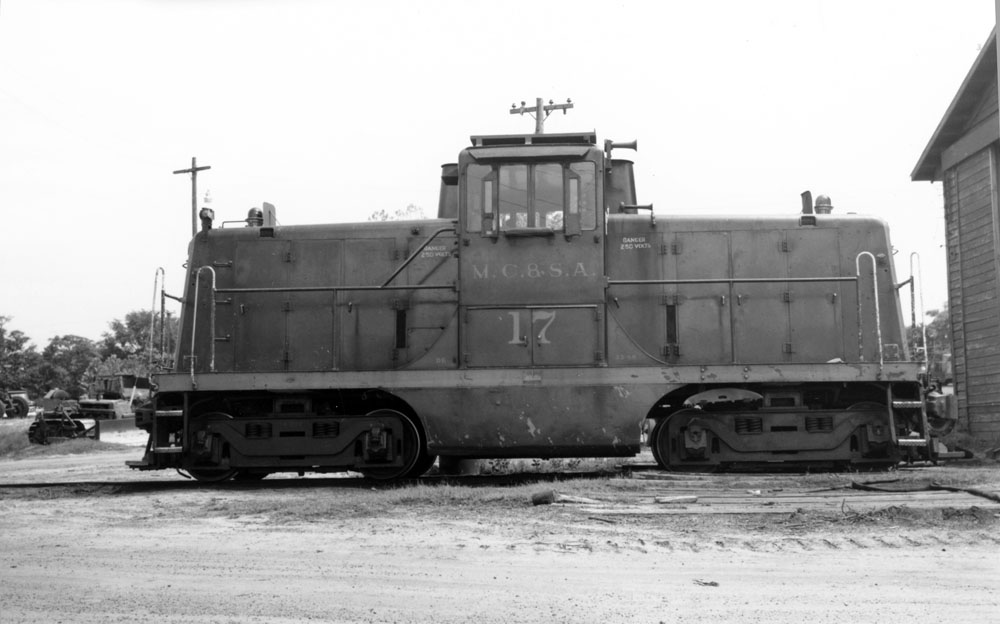
Added September 2026. A black and white shot of the #17 at rest between runs in Camden in 1968. Conniff Railroadiana photo. 
Another view of the #17 in Camden, this time coupled to the road's passenger car. Unknown photographer, Jeff Moore collection.  A color slide of the #14 departing Camden during its final operating stint on the MC&SA.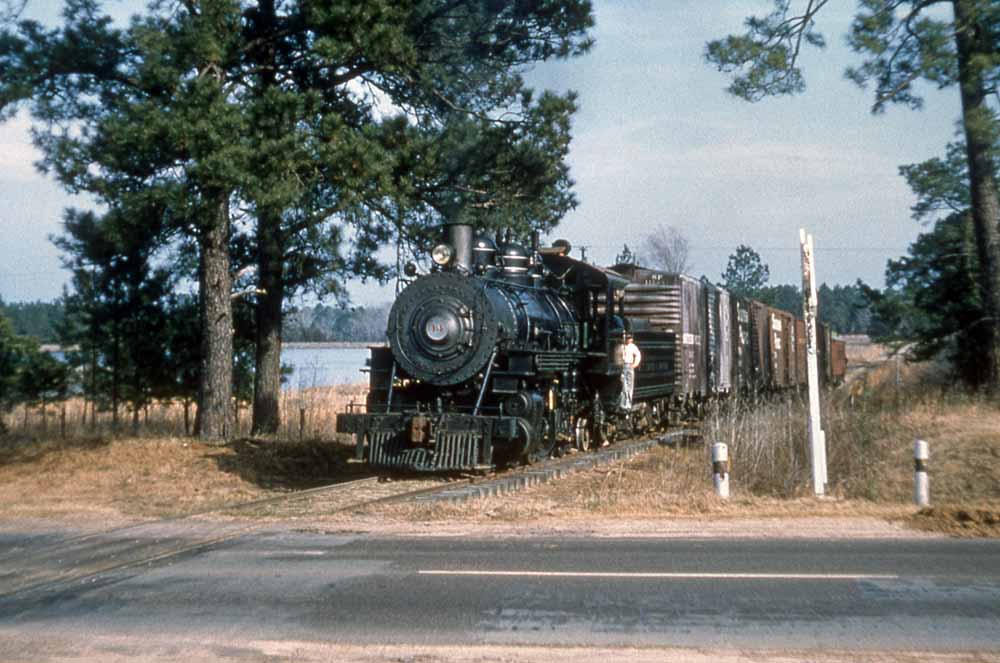
One more shot from a commercial slide set of the #14 arriving into Moscow. The #14 was too long to fit on the Moscow turntable and as such operated engine first to Moscow and tender first on the return to
Camden. 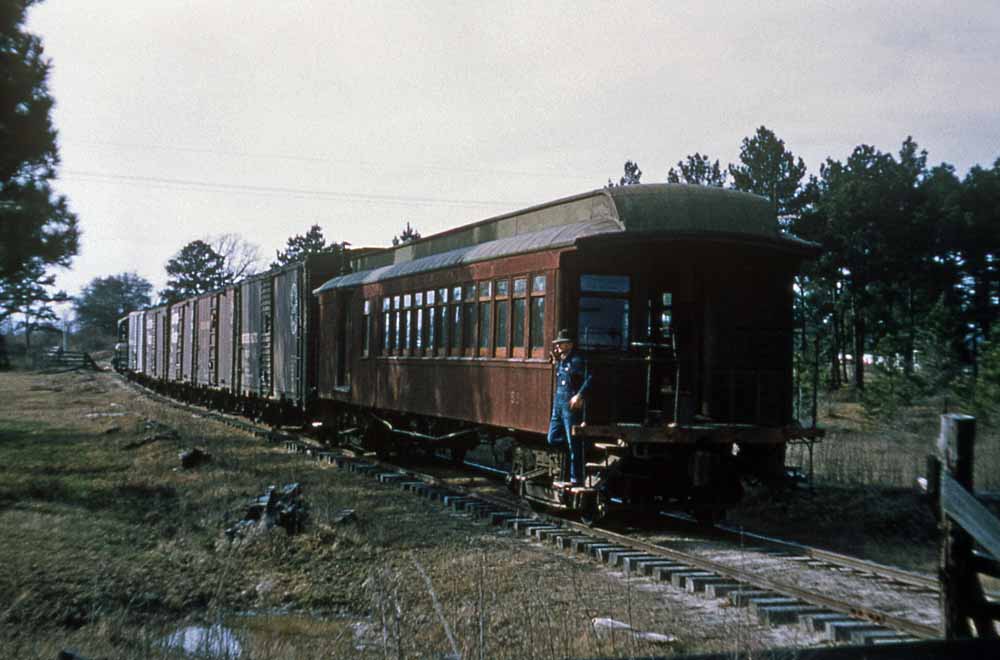
Added May 2026. Commercial duplicate slide of MC&SA combination car #512 bringing up the rear of a mixed train along the line.
The era of corporate consolidations finally caught up with the Camden operations at the end of the 1960s. The Camden mills and their associated 180,000 acres of prime Texas timberlands stood out as extremely
attractive acquisition targets for expansion minded companies, and in 1969 U.S. Plywood-Champion Papers (Ply-Champ for short) made the Carter family an offer they couldn't refuse. Much like U.S. Plywood's
purchase of the McCloud River operations the sale marked the abrupt end of the company town of Camden, though in this case it meant the end of the entire town as Ply-Champ relocated all of the employees to
nearby Corrigan, Texas, and razed almost all of the buildings in Camden save for those associated with the sawmill. The Carters retained the old steam locomotive collection, which they distributed to various
museums and tourist railroads in Texas and Arkansas. The MC&SA passenger business continued under the new ownership, as by this point it had become a popular tourist attraction. Ply-Champ initially considered abandoning the MC&SA, but elected to continue its operations, which paid off as rail traffic substantially increased due to a new plywood plant Ply-Champ built in Camden. Woodchip traffic shipped to a Ply-Champ paper mill in Houston further swelled the traffic base, and the new owner rebuilt the entire length of the railroad to handle the increased traffic. The heavier trains also severely taxed the small 44-ton General Electrict switcher that constituted the MC&SA's entire motive power fleet, and in 1971 Ply-Champ elected to replace it. As detailed on the Ahnapee & Western page in this section, Ply-Champ had just acquired the A&W in Wisconsin and made it an operating division of the McCloud River Railroad. The A&W purchase included two 70-ton General Electric locomotives, which Ply-Champ had cycled through the Green Bay & Western shops for repainting into McCloud River orange and white. The A&W #601 was the second to be painted, and as it was in the shop Ply-Champ decided the A&W only needed one of the 70-tonners. Ply-Champ instructed the GB&W to letter the #601 for the MC&SA, and to ship it south to Texas instead of back to the A&W upon completion. The #601 replaced the old 44-tonner upon its arrival and remained the primary power on the MC&SA until replaced by newer and larger locomotives in the late 1970s. The MC&SA repainted its old combination car orange and white to match the #601 shortly after its arrival, but the passenger operations only lasted another two years. In July 1973 a runaway log truck crashed into a loaded woodchip hopper in a MC&SA freight at the Highway 59 grade crossing just east of Moscow, resulting in a spectacular flaming wreck; the combination car and its 57 passengers had only been seconds away from being in the crossing at the time of the collision, and the old car was saved from being engulfed in flames by a quick thinking brakeman who uncoupled the car from the burning woodchip hopper and allowed it to roll freely away from the wreck. The MC&SA cancelled all passenger service effective the next day and sold the combination car off shortly afterwards, but freight operations continued. 
The former AHW #601, seen here on 14 July 1971 in Green Bay, Wisconsin, has been lettered for the Moscow, Camden & San Augustine and is about to depart for its new Texas home. Ronald A.
Plazzotta photo, Jeff Moore collection. 
Immediately after the #601 arrived on the property the MC&SA repainted its combination car #512 to match the new locomotive, as seen here in Camden on 26 November 1971. 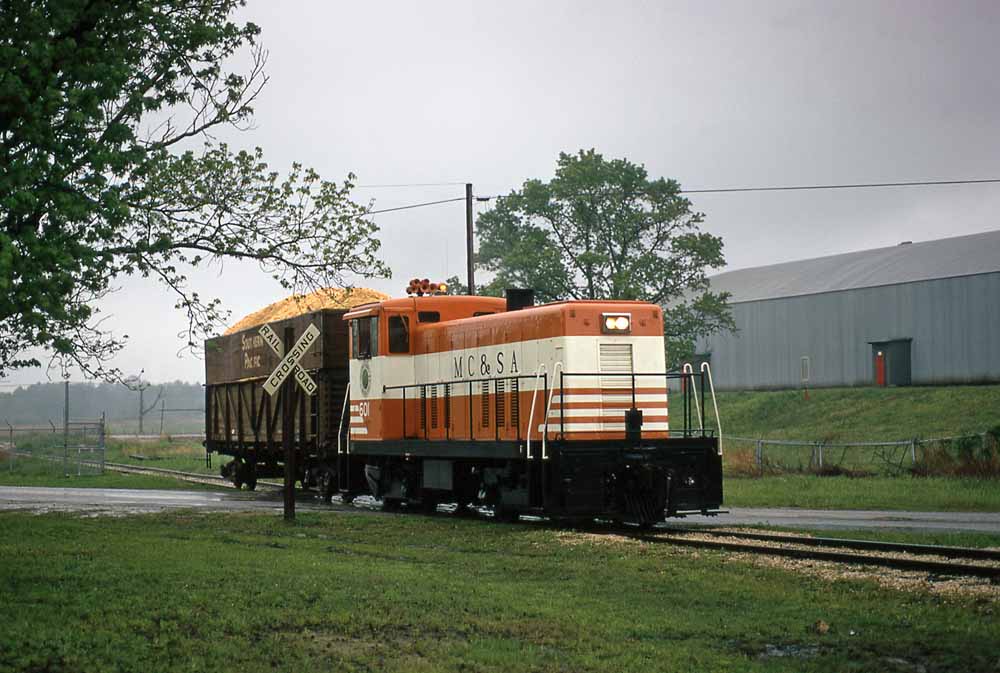
Added September 2026. The #601 with a loaded SP woodchip hopper in Camden on 6 April 1973. Glenn Anderson photo, Jeff Moore collection. 
Part of the rebuild of the railroad in the early 1970s included a new shop and office building, seen here on 6 April 1973. The combination car is awaiting the next trip on one of the shop leads.
Glenn Anderson photo, Jeff Moore collection. 
The #601 in Camden on 22 October 1973. John B. Gwinn photo. 
The #601 switching in Camden on 29 August 1974. Conniff Railroadiana photo.  The #601 in Camden on 28 May 1976. Mel Lawrence photo, Jeff Moore collection.  Moscow, Camden & San Augustine's former AHW #601 in September 1977. G.J. Bolinsky photo, Jeff Moore collection.  Another view of the MC&SA #601, this one in September 1978. Conniff Railroadiana Collection photo.  An uncredited black and white photo of the #601 in Camden on 15 November 1980.  The #601 switching at Moscow in December 1981.  One last photo of the #601 in Camden, this one dated 13 January 1982.
Unlike the McCloud River operations, Champion International retained the Camden mill and the MC&SA. The railroad also got into incentive per diem boxcars with a fleet of at least 249 cars leased from
BRAE corporation, one of Itel's chief competitors in the boxcar leasing business. Champion merged into International Paper in 2000, who in turn sold the Camden plywood plant and the MC&SA to Georgia Pacific
in 2007. While the #601 is long gone from Camden and all plants there except for the plywood plant have closed, the MC&SA has continued painting its locomotives and other equipment in a simplified version of
the McCloud River orange and white ever since. Georgia Pacific announced an $18 million investment into the Camden plant in 2023, which should translate into the railroad having a secure future hauling carloads
of plywood from Camden out to the Union Pacific connection at Moscow for many years to come. 
One of MC&SA's boxcars, now stenciled for the Mississippian Railway, in Tacoma, Washington, in December 1988. Keith E. Ardinger photo. 
The #601 was the sole power on the MC&SA until 1978, when Champion International ordered a new 110-ton centercab switcher from General Electric. Champion promptly either
leased or sold the locomotive to the MC&SA, which assigned it #1 on the roster. The locomotive is seen here in its factory paint scheme passing through St. Louis, Illinois, on 5 November 1978.
Mark Carron photo, Keith E. Ardinger collection. 
The MC&SA added a white stripe around the #1 shortly after its arrival, resulting in a simplified version of the McCloud River paint scheme. The #1 is seen here at Camden on 12 June 1980.
Jeff Moore collection.  |